
How to Make a Custom Wedding Dress Online: From Sketch to Final Gown
Two-Brides Are Better Than One- Studio RÉN Design Story

Making a custom wedding dress online starts long before the gown is made. It begins with a bride's vision, her body, her measurements, her wedding setting, and the feeling she wants her look to create.
For two brides, the process becomes even more intentional. The goal is not to match. The goal is for each bride to feel like herself while both wedding looks belong in the same story.
In this Studio RÉN design story, a deep-V satin A-line wedding dress moves from fashion illustration to 3D wedding dress simulation, bride-specific avatar preview, and final bridal look. Alongside it: a modern white bridal suit for the second bride. Two custom looks, two different silhouettes, one coherent visual world.
Here is how to make a custom wedding dress online, step by step.
How Do You Make a Custom Wedding Dress Online?
To make a custom wedding dress online, you start by defining the bride's silhouette, neckline, fabric direction, wedding setting, and fit concerns. The design is then translated into a fashion illustration, developed into a 3D wedding dress simulation, reviewed on a bride-specific avatar preview, finalized with measurements and technical construction details, and produced by a bridal atelier.
At Studio RÉN, every stage of this process is designed to help the bride review the look, proportion, and fit direction of a custom gown before production begins- so that the dress that arrives is the dress she approved.
The Custom Wedding Dress Process at a Glance
Stage | What Happens | Why It Matters |
Vision and Silhouette | Define neckline, skirt shape, fabric, and fit concerns | Creates a clear design direction |
Fashion Illustration | Translate the idea into a drawn visual concept | Confirms proportion and styling before development |
3D Simulation | Build the gown digitally before production | Reviews silhouette, volume, and fabric behavior |
Bride-Specific Avatar Preview | Review the design on body-matched proportions | Reduces uncertainty before production begins |
Technical Development | Finalize measurements, construction, and production details | Turns the approved design into a gown that can be made |
Final Gown | Produce and deliver the finished look | Brings the confirmed design into real life |
Who Is an Online Custom Wedding Dress Best For?
An online custom wedding dress works best for brides who know they want something specific but cannot find it in a boutique. That includes brides who need a particular silhouette that does not exist in ready-to-wear, brides who want made-to-measure construction rather than standard sizing, brides who live far from traditional bridal ateliers, and brides who want to see and review the design before a single piece of fabric is cut.
It is also the right process for two brides designing their wedding looks together. Each look can be developed separately, with its own design logic and its own brief, while still being kept in the same visual world as the other. The result is two intentional outfits that belong on the same wedding day, without one bride's look being defined by the other's.
Step 1: Define the Bride's Vision, Silhouette, and Fit Priorities
The first step in making a custom wedding dress online is not choosing a fabric or filling out a form. It is defining what the bride actually wants- and being specific about what she wants to avoid.
For this bride, the direction was clear from the first conversation. She wanted something minimal and modern. A deep V-neckline. Wide, structured straps rather than thin spaghetti straps or a strapless bodice. Clean satin fabric that would hold its shape through a full day of wear and photograph well in natural light. An A-line skirt with real volume- not a mermaid, not a sheath- something that moved without being fussy. No lace. No embellishment. Nothing added for decoration's sake.
That level of specificity is exactly what separates a custom wedding dress from a ready-made one. A ready-made gown forces a compromise: the neckline is right but the skirt is wrong, the silhouette works but the fit never quite lands. A custom design starts from what the bride actually wants and builds toward it without compromise.
For the second bride, the direction was equally clear and equally different. She wanted a suit. A modern, sharply cut white bridal suit with clean tailoring and nothing soft or conventionally bridal forced into it. No floral trim. No embellishment added to make it feel more "wedding." Just a well-constructed suit that happened to be white, worn on her wedding day, made specifically for her body.
The two looks were designed in parallel, always with each other in mind, but never borrowing or mirroring from each other.
Step 2: Turn the Custom Wedding Dress Idea Into a Fashion Illustration

The fashion illustration is the first translation of the bride's vision into something concrete and reviewable. It confirms proportion, neckline depth, skirt volume, strap width, and overall aesthetic direction before any fabric is cut or any pattern is drafted.
It also gives the bride something real to respond to. Most brides cannot fully articulate what they want in words alone. When they see the design drawn, they immediately know what to keep and what to adjust. That reaction to the illustration is where the real design work happens.
For this gown: the illustration confirmed the deep V was right. The wide straps read correctly. The A-line volume landed exactly where it needed to. The minimal satin finish held the modern sensibility the bride wanted without any ornamentation.
The fashion illustration is not a mood board, and it is not a rough concept. It is a design decision in visual form.
Step 3: Create a 3D Wedding Dress Simulation Before Production

Once the fashion illustration is approved, the design moves into 3D wedding dress simulation. This is where making a custom wedding dress online becomes fundamentally different from ordering a standard gown.
A 3D simulation renders the dress as a three-dimensional garment before production begins. It is not a rendering of the sketch. It shows the actual gown: how the neckline sits against the body, how the bodice is structured, how much the skirt flares, how the fabric catches and reflects light, how the train moves and trails. Every proportion decision from the illustration phase gets tested here against something that behaves like a real garment.
For this gown, the simulation confirmed several critical decisions. The deep V held its balance.
Dramatic without being destabilizing. The wide straps gave the bodice enough structure to support the skirt's weight without adding boning the bride had not asked for. The A-line volume was full without reading as a ballgown. The satin in the simulation showed the fabric's sheen clearly, confirming the choice was right for the outdoor ceremony setting.
This stage also catches problems before they become expensive ones. If the neckline sits slightly too deep, or the skirt reads slightly flat, the simulation is the moment to catch it. Not during a fitting, not after production has started. For Studio RÉN, the 3D simulation is a core part of making the online custom wedding dress process clearer, more visual, and less uncertain for every bride.
Step 4: Review the Gown on a Bride-Specific Avatar Preview

After the 3D simulation, the design moves to a bride-specific avatar preview. This stage puts the gown on a body-matched digital reference so the bride can review how the design sits against her own proportions, not a standard model or a generic size chart.
A custom wedding dress should not be judged on a sketch or on a standard industry model that shares none of the bride's measurements. The bride-specific avatar preview shows how the neckline sits at her actual depth, how the bodice lands at her waist, how the skirt volume works for her height and frame. It is the closest thing to seeing the finished dress before it is made.
This step helps reduce uncertainty. Brides designing a custom wedding dress online carry a real and reasonable fear: that what arrives will not match what was imagined. The bride-specific avatar preview closes that gap by making the design visible in three dimensions against body-specific proportions, before production begins.
If anything reads differently than expected. The neckline, the waist placement, the skirt fullness. This is the stage to say so. Adjustments made here are far easier to review and resolve before production begins.
Step 5: Design the Second Bride's Look and Make Two Wedding Outfits Feel Connected Without Matching
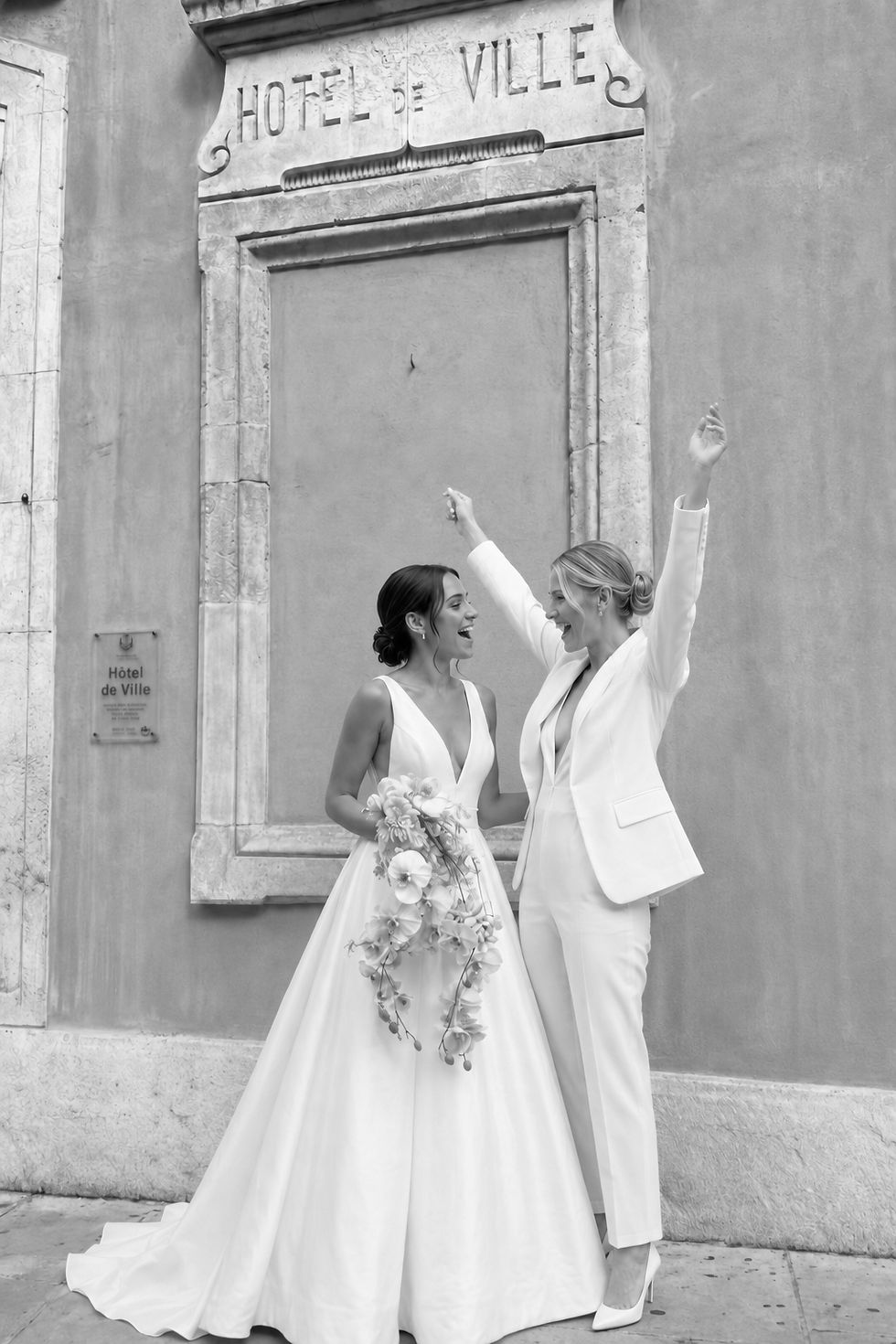
The bridal suit followed the same underlying design logic as the gown: start from what the bride actually wants, define the silhouette and construction, and work toward it without compromise.
For this bride: a sharp white blazer with clean lapels. Well-cut tailored jumpsuit. Ivory styling throughout. A modern wedding outfit designed for a woman who knew exactly how she wanted to look, with no bridal convention forced on top of it.
Two brides do not need matching outfits. They need outfits that belong in the same visual story.
The connection between a wedding gown and a bridal suit is not made by copying each other's details. It is made through shared color family, shared level of formality, shared fabric quality, and the confidence that comes from each bride wearing something made specifically for her. Both looks were clean. Both were white. Both were minimal and modern. Neither borrowed from the other. That is exactly what made them work together.
For couples searching for two brides' wedding outfits, same-sex wedding outfit ideas, or bride in suit and bride in dress inspiration, the most important rule is this: do not force the looks to match. A wedding dress and a bridal suit work beautifully together when they share a color family, a formality level, a fabric standard, and a design mood. Two different silhouettes in the same visual world will almost always look more intentional than a forced matching set.
Step 6: Finalize Measurements, Fabric Direction, and Production Details
Before a custom wedding dress goes into production, the design moves from visual approval into technical development. This is where the bride's measurements, body proportions, neckline placement, skirt volume, fabric selection, construction details, and finishing preferences are translated into a production-ready plan.
For a custom wedding dress designed online, this stage matters because the bride is not relying on repeated in-person fittings to solve problems after the fact. The goal is to make the right decisions earlier: how deep the neckline sits against this bride's body, how much support the bodice needs to carry the skirt's weight, where the natural waistline falls, how full the skirt should be for the wedding venue and setting, and how the gown should move across a full day of wear.
At Studio RÉN, the sketch shows the design direction. The 3D simulation tests the silhouette. The bride-specific avatar preview helps review proportion and fit. The technical development stage then turns those confirmed decisions into a gown that can be made, measured, and delivered with precision.
This is the stage that most brides do not think about, and most custom dress processes under-explain. It is also the stage that determines whether the process succeeds.
Step 7: The Final Wedding Look

The process exists for one reason: to produce something that looks and feels right on the actual wedding day. In real light. Next to real people. In real photographs.
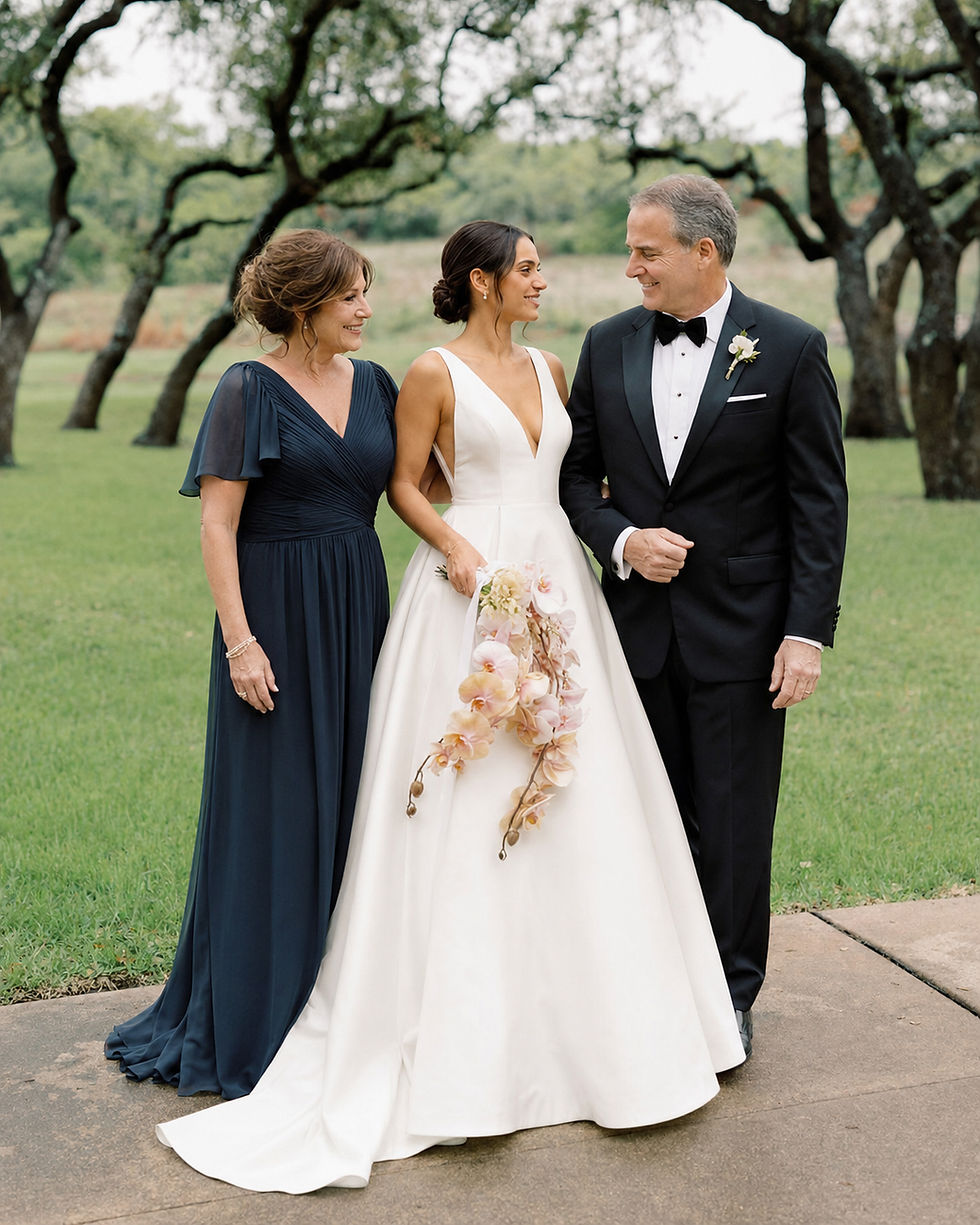
The gown holds its structure across a full day of wear. The deep V sits correctly. The A-line skirt moves cleanly without bunching or pulling. The satin reads beautifully in outdoor natural light and in the warmer tones of the reception setting.
The suit does exactly what a well-made suit should do. It fits. It holds its shape. It looks like a decision, not an accident.
And together, the two looks feel like they were designed for the same wedding. Because they were.

What to Prepare Before Starting a Custom Wedding Dress Online
What to Prepare | Why It Helps |
Wedding date | Sets the production timeline |
Wedding location | Helps determine fabric, train length, and level of formality |
Inspiration images | Shows the design direction faster than words alone |
Preferred silhouette | Helps define the gown structure |
Neckline and strap preferences | Guides the bodice design |
Fit concerns | Helps the design address the bride's actual body |
Body measurements or photos | Supports body-specific review and made-to-measure development |
FAQ: How to Make a Custom Wedding Dress Online
Can I Make a Custom Wedding Dress Online?
Yes. A custom wedding dress can be designed and made online when the process includes a guided design consultation, structured measurement collection, fashion illustration, 3D wedding dress simulation, bride-specific avatar preview, and clear production communication. Studio RÉN works with brides remotely through every stage, from the first design conversation to final delivery.
Read more here: The Complete Guide to Ordering a Custom Wedding Dress Online
What Information Do I Need to Start a Custom Wedding Dress?
To start a custom wedding dress, it helps to have your wedding date, wedding location, general style direction, preferred silhouettes, neckline preferences, fabric preferences, inspiration images, body measurements, and any fit concerns you want addressed. You do not need every detail confirmed before starting. A strong custom design process helps refine the direction as it develops.
How Do I Start Making a Custom Wedding Dress?
Start by defining your silhouette, neckline, skirt shape, fabric preference, wedding setting, and any specific fit priorities. From that starting point, the design moves through a fashion illustration, 3D simulation, bride-specific avatar preview, and technical production plan. The clearer your direction at the start, the stronger the design will be at every stage that follows.
How Long Does It Take to Make a Custom Wedding Dress?
Most custom wedding dresses take around 3 to 6 months from design approval to delivery, depending on the complexity of the design, fabric sourcing, and production requirements. At Studio RÉN, starting 6 to 8 months before the wedding is recommended when possible, particularly for brides designing and ordering remotely.
Why Use a 3D Wedding Dress Simulation Before Making the Gown?
A 3D wedding dress simulation allows the bride to review her gown's silhouette, neckline depth, skirt volume, fabric behavior, and overall proportions before the dress goes into production. For brides ordering a custom wedding dress online without multiple in-person fittings, it is the step that closes the gap between what is imagined and what is made.
To make your custom 3D Wedding Dress Simulation, click here: Preview My Gown
Can Two Brides Wear Different Wedding Outfits?
Yes. Two brides do not need to match. One can wear a wedding dress while the other wears a bridal suit, or both can wear gowns, suits, or entirely different looks. As long as the outfits feel intentional together. The goal is coherence, not coordination. Two different silhouettes in the same color family, at the same level of formality, with the same quality of construction, will almost always look more considered than a forced matching set.
Read more here: Wedding Outfits for Two Brides: The Complete Style Guide
Can Studio RÉN Create a Custom Bridal Suit?
Yes. Studio RÉN designs custom bridal looks beyond traditional wedding gowns, including modern bridal suits, second looks, reception dresses, and coordinated wedding outfits for two brides. The process starts with the bride's preferred silhouette, fit, fabric direction, and wedding context. The same way every custom gown begins.
What Should Two Brides Look for in a Custom Wedding Outfit Designer?
Look for a designer who treats two custom looks as two separate design processes, not a single shared brief. Each bride's body, style, and preferences need individual attention. The designer's job is to bring both looks into the same visual world without flattening either bride's identity into a matching set.
Ready to Design Your Custom Wedding Dress Online?
If you are trying to design a wedding dress online, the biggest risk is not the idea. It is the gap between what you imagine and what arrives. Studio RÉN was built to close that gap through guided design, body-specific review, 3D simulation, and made-to-measure production.
Studio RÉN is a custom bridal platform creating made-to-measure wedding dresses through bride-specific avatars, 3D gown previews, and custom design development. Brides can preview the fit, silhouette, and design direction of their gown before production begins.


Comments