
How to Choose the Right Wedding Dress Silhouette for Your Body Type and Bridal Vision
Updated: Jul 22

What You'll Learn
The honest breakdown of which wedding dress silhouettes work for which body types - without the sugarcoating
How your venue, aesthetic, and comfort level should shape your silhouette decision before anything else
Why choosing the right silhouette is the single most important dress decision you will make
Finding the right wedding dress silhouette can make dress shopping feel dramatically easier. Most brides start by searching for the best wedding dress for body type, but that alone is too narrow. The better question is this: which silhouette fits your body, your style, and the way you want to feel on your wedding day?
Because the truth is simple. The right gown is not just about what looks flattering in theory. It is about proportion, movement, comfort, and whether the dress actually reflects your bridal vision. That matches the core advice repeated across "Brides" and "The Knot" silhouette guides.
Quick Answer: How Do You Choose the Right Wedding Dress Silhouette?
The right wedding dress silhouette depends on proportion, not just body type. A-line, ballgown, mermaid, fit-and-flare, sheath, column, empire, midi, and mini silhouettes all create different relationships between the bust, waist, hip, torso length, shoulder line, and skirt volume.
The best silhouette is the one that supports your body structure, works with your fabric, matches your wedding setting, and lets you move comfortably. That is why a silhouette should not be chosen from a generic body-type chart alone. It should be reviewed on your actual proportions before production.
At Studio RÉN, silhouette decisions are reviewed through custom design direction, technical fit review, and a 3D gown preview before the dress is made, so the bride can see whether the neckline placement, waist position, skirt volume, and overall proportion are working before fabric is cut.
First, stop following rigid body-type rules
A lot of bridal content still pushes the idea that one body shape should wear one type of dress. That thinking is outdated. The Knot explicitly pushes back on the myth of a single “best” dress for each body type. Body shape can help you understand fit and balance, but it should not trap you into a formula. A-line is not reserved for one kind of bride. Mermaid is not off-limits to another. The goal is not to obey a chart. The goal is to find the silhouette that feels right on you.

Do you want your look to feel minimal and modern? Romantic and soft? Sculptural and fashion-forward? Regal and dramatic? This matters because silhouette creates the foundation of the dress. Recent Brides trend coverage shows that current bridal fashion is leaning into basque waists, structured draping, layered lace, and architectural lines. That means silhouette is doing even more of the visual heavy lifting than brides often realize.
The main wedding dress silhouettes, explained
A-line Wedding Dress

An A-line wedding dress has a fitted bodice and a skirt that gradually flares from the waist. It is one of the most versatile and consistently recommended silhouettes because it creates shape without feeling overly restrictive. Brides and The Knot both position it as one of the easiest silhouettes to wear across different body types and wedding styles.
Ball Gown Wedding Dress

A ball gown wedding dress has a fitted bodice and a full, dramatic skirt. This is the classic high-drama bridal shape. It emphasizes the waist and creates volume through the lower half, which is why it remains a staple in traditional bridal styling. Brides notes that it can flatter many body types, but on petite frames the scale has to be handled carefully or the gown can start wearing you.

Mermaid Wedding Dress

A mermaid wedding dress is fitted through the bodice, waist, and hips, then flares near the knees. This is the silhouette brides usually choose when they want strong curve emphasis and a more dramatic shape. It can look stunning, but it is also more restrictive than softer silhouettes. If movement matters to you, that tradeoff is real.
Trumpet or Fit and Flare Wedding Dress

A fit and flare wedding dress or trumpet silhouette gives you shape without going fully rigid like a mermaid. The flare begins higher and usually feels easier to move in. If you want a defined waist and hips but do not want to feel locked into the dress, this is often the smarter option. Brides treats trumpet and fit-and-flare as more wearable alternatives for brides who still want contour.

Drop Waist Wedding Dress
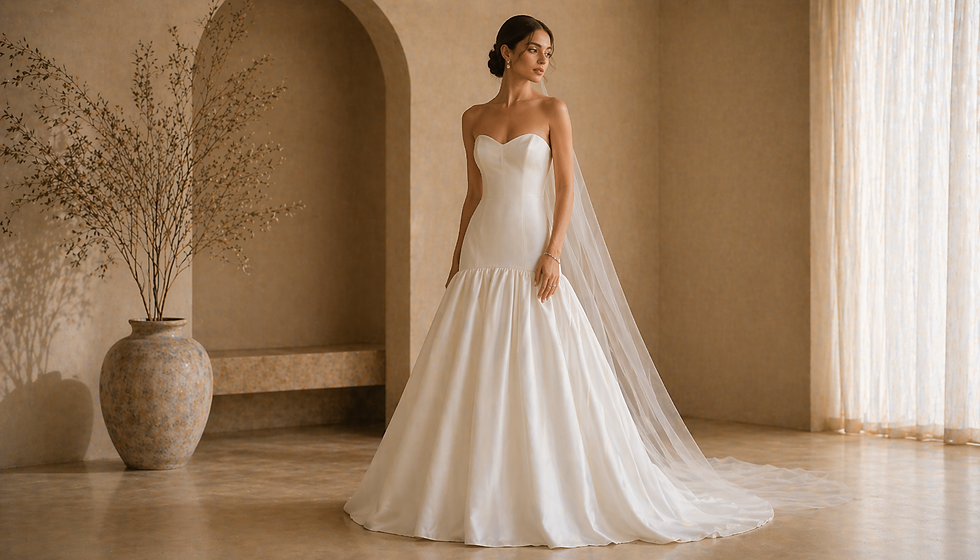
A drop waist wedding dress features a fitted bodice with the waist seam placed lower than the natural waist, often closer to the hips, before opening into a softer skirt. This silhouette creates a longer, leaner torso and gives the gown a more relaxed, elongated structure than a classic waistline. It can work especially well for brides who want to highlight long legs and create balanced proportions without the fullness of a traditional ball gown. Drop-waist gowns also carry a distinct vintage mood, with a refined, fashion-forward feel that often nods to 1920s-inspired bridal styling.
Sheath or Slip Wedding Dress

A sheath wedding dress follows the body in a straighter, cleaner line, making it a strong choice for brides who want a modern, minimalist, or destination-ready look. It can elongate the body beautifully, especially on taller or petite frames, though it creates less built-in shaping than fuller silhouettes. Its impact comes from line, fabric, and clean construction. For brides drawn to Carolyn Bessette-Kennedy’s iconic ’90s wedding look, a slip-inspired sheath gown is an especially strong reference. With its effortless silhouette, soft skim over the body, and understated silk or satin finish, it captures that refined, less-is-more kind of bridal elegance.

Column Wedding Dress

A column wedding dress has a slim, straight-cut silhouette that falls cleanly from top to hem with very little built-in shaping. Its appeal comes from its sleek, elongated line and understated modernity rather than volume or contour. Because the silhouette is so clean, structure often comes from the fabric itself. Materials like taffeta, brocade, corded lace, or other more substantial textiles help give the dress presence and polish. This style can be especially strong for brides who want a refined, fashion-forward look, and it is often most flattering when tailored carefully to the body, particularly for brides with straighter or more athletic frames.
Midi Wedding Dress

A midi wedding dress features a hemline that falls between the knee and the ankle, most often around mid-calf. With its vintage character and slightly more covered feel, this silhouette offers a polished balance between formal and relaxed. It can be especially flattering on taller brides, since the shortened hemline still preserves proportion and elegance. Midi gowns are also a strong option for brides planning a courthouse wedding, a city ceremony, or a more intimate celebration, where a floor-length gown may feel too formal.
Mini Wedding Dress

A mini wedding dress has a hemline that falls above the knee, giving it a playful, modern, and less conventional feel. This silhouette is often a strong choice for brides who are eloping, getting married in a more casual setting, or looking for a second look for the reception or after-party. Because it shows more leg and carries less visual weight than a full-length gown, it can work especially well on petite frames without overwhelming the body. The effect is youthful, fashion-forward, and ideal for brides who want something lighter, sharper, and less traditional.
Empire Waist Wedding Dress

An empire waist wedding dress has a raised waistline that sits just below the bust, with the skirt flowing down from there. It tends to create softness, comfort, and a slightly elongated look. Brides highlights it as a strong option for brides who want ease through the midsection or a more romantic, airy feel.

Before You Choose a Silhouette, Clarify the Pattern Behind Your Inspiration
By now, you may have a better sense of which wedding dress silhouettes feel closest to your body type and bridal vision. But the most useful next step is not choosing one shape too quickly. It is understanding what you keep responding to across your saved images: the neckline, waist placement, skirt volume, fabric mood, sleeve shape, structure, and overall proportion. The Studio RÉN Custom Gown Vision Guide helps you organize your inspiration before your custom gown direction moves into design, 3D preview, and production.

How To Choose The Best Wedding Dress Silhouette For Your Body Type

If you want more balance between the upper and lower body, start with an A-line wedding dress. It gives structure at the waist while skimming over the hips, which is why it is repeatedly recommended in bridal silhouette guides.
If you want to emphasize curves, start with mermaid, trumpet, or fit and flare wedding dress silhouettes. These shapes stay closer to the body and keep waist definition front and center.
If you are petite, cleaner lines usually work better than overwhelming volume. A-line, empire, and sheath silhouettes often help elongate the frame. Huge skirts can still work, but only when the scale is controlled properly.
If you have a straighter frame and want more visible shape, look for design features that create it: a defined waist, corsetry, basque waistlines, draping, or a fit-and-flare shape. That advice also lines up with what current bridal trend reporting is showing on runways.
If you want softness, comfort, and less focus on compression, A-line and empire silhouettes are usually a better place to start than mermaid. That is not about hiding the body. It is about choosing ease over tension.
What Most Wedding Dress Silhouette Guides Miss
Most wedding dress silhouette advice stops at body shape: pear, hourglass, petite, curvy, athletic, or straight. That can be a starting point, but it is not enough to choose a gown that actually works.
Fit depends on more specific technical points: torso length, bust placement, shoulder slope, waist height, hip curve, posture, and how much structure the bodice needs to hold the silhouette in place.
Two brides can have the same bust, waist, and hip measurements but need completely different waist placement, neckline scale, strap position, skirt volume, or internal support.
This is especially important with custom wedding dresses online. A gown can match the measurements and still look wrong if the proportions are not reviewed. For example, a basque waist can lengthen the torso beautifully on one bride and pull the eye too low on another. A mermaid skirt can define the hip beautifully, but if the flare starts too low, walking becomes difficult. A strapless neckline can look clean and modern, but if the bust placement and bodice structure are not right, the dress may feel unsupported.
The goal is not to find the silhouette that works for a “body type.” The goal is to refine the silhouette around the bride’s actual body.
Do not ignore movement
This is where brides mess up all the time. They choose based on a still image and forget they need to walk, sit, breathe, hug people, dance, and stay in the gown for hours. A silhouette can look incredible in a photo and still be a bad choice for the actual experience of the day. Mermaid gowns, heavily structured skirts, and high-volume shapes can all change how the dress feels in motion. The best silhouette is not just the one that photographs well. It is the one you can live in.
Fabric changes everything

The same silhouette can feel completely different depending on fabric. Brides’ fabric guide notes that heavier fabrics like satin and Mikado support structure, while softer fabrics like chiffon create more movement. Crepe usually works well for sleek, body-skimming gowns. So an A-line in Mikado and an A-line in chiffon may technically be the same shape, but they will not give the same result at all.
That is why choosing your wedding dress silhouette should never happen in isolation. Silhouette gives you the outline. Fabric gives you the mood.
How Studio RÉN Reviews Silhouette Before Production
Studio RÉN designs custom wedding dresses online, which means silhouette decisions need to be clear before the gown moves into production. After a bride shares her inspiration, measurements, and fit context, Studio RÉN develops the gown direction and reviews the design through a 3D preview before production begins.
That preview helps answer the questions a flat inspiration image cannot answer: Does the neckline sit at the right height? Does the waist placement balance the torso? Is the skirt volume overwhelming the frame? Does the bodice structure support the shape? Does the fabric direction match the mood of the silhouette?
This is where custom bridal design becomes more precise. Instead of choosing a dress from a rack and hoping the silhouette works, the bride can review the gown direction on her body before fabric is cut.
If you are still collecting inspiration, start with the Studio RÉN Custom Gown Vision Workbook. It helps you organize the silhouettes, necklines, fabrics, details, and moods you keep saving before your 3D preview or design consultation begins.
If you already know the direction you want, start Preview My Gown to see how your custom wedding dress could look before production.
The fastest way to narrow it down
Ask yourself these four questions:
Do I want a defined waist?
Do I want volume or a cleaner line?
Do I want to highlight curves or keep things softer?
Do I care more about drama, ease, or movement?
That alone will cut through most of the noise. If you want a safe starting point, begin with A-line.If you want modern minimalism, try sheath.If you want drama, try ball gown.If you want shape without extreme restriction, try fit and flare or trumpet.If you want full curve emphasis, try mermaid. That is the practical breakdown. Everything after that is refinement.
Choosing the right wedding dress silhouette is not about following rigid rules. It is about finding the shape that supports your body, reflects your bridal vision, and feels right for the way you want to move, celebrate, and remember your day. From A-line to column, midi to mini, the best gown is the one that feels unmistakably like you.
Ready to Turn Your Silhouette Ideas Into a Clearer Gown Direction?
Choosing the right wedding dress silhouette is not about forcing yourself into a body-type rule. It is about understanding how your favorite shapes, necklines, waist placements, fabrics, and details work together on your proportions and for the way you want to feel on your wedding day. The Studio RÉN Custom Gown Vision Guide helps you sort through your saved images, define what you love, and prepare a stronger starting point before your gown moves into custom design and 3D preview.

If you want expert help translating your vision into the right silhouette, fabric, and fit direction, start your Studio RÉN gown preview today and see your dress concept before it’s made, or contact us for a consultation meeting.
FAQ
What are the main types of wedding dress silhouettes? The main wedding dress silhouettes are A-line, ballgown, mermaid, fit-and-flare, sheath, and empire waist. Each creates a different shape from the waist down and suits different proportions, comfort needs, and bridal aesthetics. A-line and ballgown are the most popular choices overall, while mermaid and fit-and-flare are the most body-conscious options.
Which wedding dress silhouette is most flattering for different body types? There is no single most flattering wedding dress silhouette for every body type. A-line works across almost every figure because it fits at the bodice and skims the lower body without clinging. Ballgown defines the waist and creates volume. Mermaid and fit-and-flare celebrate curves. Sheath suits lean, straight figures. The better question is which silhouette matches how you want to feel, not which one a chart says you should wear.
How Do I Know Which Wedding Dress Silhouette Will Work On My Body?
The best way to know which wedding dress silhouette will work on your body is to review proportion, not only size. Bust, waist, and hip measurements are useful, but silhouette also depends on torso length, shoulder slope, bust placement, waist height, hip curve, posture, fabric behavior, and the amount of bodice structure needed. Studio RÉN reviews these details through custom design direction and a 3D gown preview before production begins.
Can A 3D Wedding Dress Preview Help Me Choose A Silhouette?
Yes. A 3D wedding dress preview can help a bride see whether the silhouette, neckline placement, waist position, skirt volume, and overall proportion are working before the gown is made. It is especially useful for custom wedding dresses online because it gives the bride more visual clarity before fabric is cut.
What If I Like Parts Of Several Different Wedding Dress Silhouettes?
That is normal. Many brides do not want one exact silhouette from one exact dress. You might like the neckline from one gown, the waist placement from another, the skirt volume from a third, and the fabric mood from a completely different image. Studio RÉN’s custom process is built around translating those separate references into one cohesive gown direction before production.
Should I Choose My Wedding Dress Silhouette Before Choosing Fabric?
Choose the silhouette and fabric together. Silhouette creates the shape, but fabric controls how that shape behaves. Mikado, satin, crepe, chiffon, lace, and tulle can make the same silhouette look structured, soft, fluid, romantic, or architectural. A-line in Mikado is not the same as A-line in chiffon. Mermaid in crepe is not the same as mermaid in lace. The fabric decision can completely change the final result.
What Is The Safest Wedding Dress Silhouette To Order Online?
A-line is usually the safest starting point for ordering a wedding dress online because it defines the bodice and waist while allowing more ease through the hip and skirt. But “safe” does not always mean best. A bride may still need a different silhouette depending on her proportions, wedding setting, comfort needs, and design vision. For a custom wedding dress online, the safest process is one that reviews the silhouette in 3D before production.
Can Plus-Size Brides Wear Mermaid Or Fit-And-Flare Wedding Dresses?
Yes. Plus-size brides can absolutely wear mermaid or fit-and-flare wedding dresses. The issue is not whether the silhouette is allowed. The issue is how it is drafted, where the flare begins, how the bodice supports the bust, how the waist is placed, and whether the skirt allows movement. A plus-size mermaid gown needs precise measurements, strong internal structure, and careful proportion review. It should not simply be graded up from a standard sample size.
What is the difference between mermaid and fit-and-flare wedding dresses?
A mermaid gown stays fitted through the hips and thighs and flares at or below the knee, creating a dramatic, sculpted look with limited movement. A fit-and-flare opens earlier, usually at the mid-thigh, which gives more freedom to walk and dance. If comfort and movement matter as much as the silhouette shape, fit-and-flare is usually the more wearable option.
What wedding dress silhouettes work best for curvy or plus-size brides?
A-line, empire waist, and fit-and-flare are the most commonly recommended wedding dress silhouettes for curvy and plus-size brides. A-line creates a long uninterrupted line from bust to floor. The Empire waist sits below the bust and flows freely. Fit-and-flare celebrates the figure when drafted to exact hip and thigh measurements. The key for plus-size brides is precise measurement, not silhouette choice alone.
Does fabric change how a wedding dress silhouette looks?
Yes, significantly. Structured fabrics like satin, Mikado, and crepe hold the shape of a silhouette firmly and photograph with crisp lines. Softer fabrics like chiffon, georgette, and tulle drape and move, which changes how the same silhouette reads on the body. A mermaid in satin looks completely different from a mermaid in chiffon, even at the same measurements.
What wedding dress silhouette is best for a garden or outdoor wedding?
Lighter silhouettes work best for outdoor weddings. A-line and empire waist in chiffon or georgette move naturally in open-air settings and are easier to manage on uneven ground. Heavy ballgown skirts and structured mermaid silhouettes can be difficult to move in outdoors, especially on grass or gravel.

Studio RÉN is an online custom bridal studio that designs and creates made-to-measure wedding dresses around each bride’s measurements, body proportions, and design vision. Instead of choosing a silhouette from a standard size chart or guessing how a gown will look from inspiration images, Studio RÉN develops a custom gown direction, reviews fit and proportion through technical design, and previews the dress in 3D before production begins. The goal is to help brides make clearer silhouette, neckline, fabric, and construction decisions before fabric is cut, with no in-person fittings required.
If you are still organizing your wedding dress inspiration, start with the Studio RÉN Custom Gown Vision Workbook. If you are ready to see how your custom wedding dress could look on your body before production, submit Preview My Gown.


Comments