
Second Look or Convertible Wedding Dress?
Updated: May 19

What You'll Learn
The real difference between a convertible dress and a reception second look - and why it matters more than you think
Which option works better depending on your venue, reception style, and comfort level
How Studio RÉN designs dresses that deliver two distinct looks without compromising either one
How to transform your bridal look from ceremony to reception - without buying two, three, or four different dresses.
Every bride has imagined it at least once - that moment midway through the reception where she sweeps back in wearing something entirely different, the guests gasp, and the whole energy of the evening shifts. The second look wedding dress is no longer a celebrity-only luxury. It's one of the fastest-growing trends in bridal right now, and the good news is: you don't need a limitless budget or a team of stylists to pull it off.
In this guide, we're breaking down the difference between a true second dress and a convertible wedding dress, walking you through every transformation option available in 2025, and helping you decide which approach fits your personality, venue, and budget. Whether you're drawn to the drama of a full outfit change or the elegance of detachable sleeves that come off in seconds, there is a version of this that works for you.

"You shouldn't have to choose between the ceremony gown of your dreams and the freedom to actually dance at your own wedding. In 2025, you genuinely don't have to."
Why More Brides Are Changing Their Look on the Day
The rise of the bridal second look is rooted in something very practical: most wedding dresses are designed to be breathtaking, structural, and camera-ready - which often means they are not exactly designed for a four-hour dance floor. Heavy trains, structured boning, multiple layers of tulle, and formal silhouettes are gorgeous for the ceremony. By the time the reception heats up, comfort becomes a real priority.
Beyond comfort, there's the joy of self-expression. The reception is a different kind of moment- looser, more celebratory, more you. Many brides find that a wedding reception dress that feels lighter, more playful, or distinctly modern gives them permission to fully let go and enjoy the party. It's also, simply put, an extraordinary photo opportunity. Two completely different bridal looks mean two sets of images that feel distinct and memorable.
Then there's the practical reality of the timeline. Wedding photographers capture the ceremony in one mood, the portraits in another, and the reception in another still. A dress change- whether full or partial- creates a natural visual narrative across the day's photography.
The numbers
A second separate reception dress can add anywhere from a few hundred to several thousand pounds on top of the main gown- plus a second round of alterations fees and storage. A convertible gown sidesteps all of that. You're investing in one beautifully made dress with transformative elements built in.
Every Way to Transform Your Convertible Wedding Dress
From a five second sleeve removal to a full outfit change- here are all your options:
Option 01 Detachable Sleeves

One of the simplest and most effective transformations available. Detachable sleeves on a wedding dress can completely change the character of a gown- from modest and romantic during the ceremony to sleek and open for the reception. Floor-length illusion sleeves, structured lace cuffs, dramatic bell sleeves, or delicate off-the-shoulder panels all unhook or snap off in moments, revealing the strapless or minimal silhouette beneath. No changing room, no time lost.
Option 02 Detachable Overskirt or Train

The single most popular convertible bridal element right now. A full, voluminous overskirt- in tulle, organza, lace, or structured satin- layers over your base gown for the ceremony and aisle moment. At the reception, it detaches at the waist (usually via hooks, snaps, or a belt) to reveal the fitted, shorter, or entirely different silhouette underneath. Your guests see a complete transformation- two distinct looks- without you ever leaving the room for more than thirty seconds.
Option 03 Detachable Lace Topper or Bolero

A structured lace bolero, a sheer embroidered jacket, or a dramatic bell-sleeve topper adds coverage, ceremony formality, and couture impact over a strapless or minimalist base gown. For the reception, removing the layer reveals a completely different aesthetic- often far more modern and dance-ready. This option works beautifully for religious ceremonies where more coverage is required, transforming elegantly when formality is no longer necessary.
Option 04 Detachable Cape or Bow
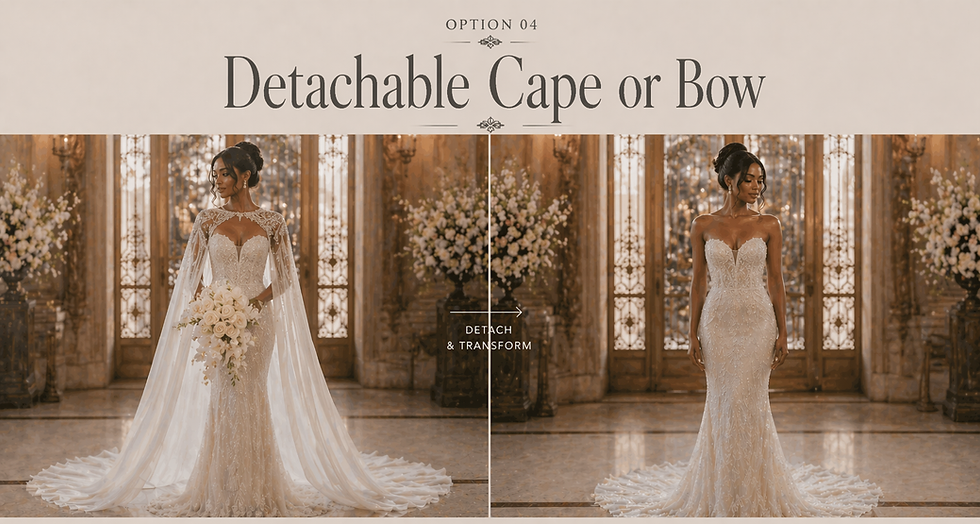
Among the most fashion-forward convertible choices in 2026 bridal collections. A dramatic structured cape- floor-length, embroidered, or simply breathtaking in silk- flows behind the gown for the ceremony and portrait session, then removes to reveal the streamlined dress beneath. Similarly, an oversized architectural bow at the back or waist makes a high-impact statement down the aisle before detaching to leave a cleaner, more modern silhouette for dancing.
Option 05 Full Second Look — Separate Dress

The original approach: two entirely separate gowns. Your ceremony dress is everything you dreamed of- structured, sweeping, and unforgettable. Your wedding reception dress is something entirely different- a mini, a sleek column, a jumpsuit, a slinky slip dress, or a sparkly party look. This option gives you maximum freedom of expression but requires more planning, more budget, more fitting appointments, and more time out of the reception for the change itself.
Option 06 A Custom Convertible Addition
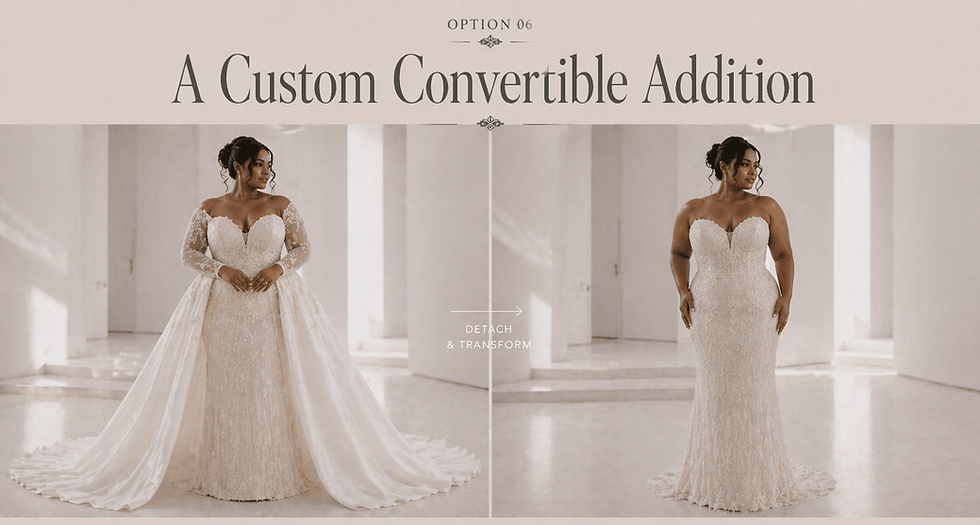
Already have a dress you love? A skilled seamstress or bridal atelier can often create bespoke detachable elements specifically designed for your gown- a custom-made overskirt in a matching fabric, fitted detachable sleeves, or a structured train that hooks seamlessly onto your existing gown. At Studio Ren, we specialise in exactly this kind of work: transforming a single dress into a multi-moment bridal look through precise, thoughtful craftsmanship.
Second Look vs. Convertible Wedding Gown- Which Is Right for You?
Both give you multiple bridal moments. Here's how they differ.
Separate Second Look Dress
Two entirely different silhouettes with no shared design language required
Maximum styling freedom- you can choose a completely different mood, fabric, colour, and neckline
Higher total cost: two gowns, two sets of alterations, two storage decisions
A full change takes 15–30 minutes away from the reception
Ideal if your ceremony and reception are very different in formality or setting
Convertible Gown Most Popular
One investment- multiple looks built into the same beautifully made gown
Transformation takes seconds, not minutes- you barely leave the celebration
Cohesive aesthetic- both looks share the same fabric, craftsmanship, and design story
Often the more sustainable choice- one carefully made dress rather than two separate purchases
Ideal for brides who love the idea of a reveal moment without a full outfit change
Not sure which approach fits your wedding day? Read on- we'll help you work it out.
When Should You Make the Change?
Timing your look transformation correctly is just as important as the look itself. Change too early and your ceremony gown barely gets its moment. Change too late and your second look goes unseen. Here's how to think about it:

During couple portraits or cocktail hour
The most popular moment for a convertible transformation. Remove the overskirt, detach the cape, or slip off the sleeves while your photographer captures both looks during the portrait session. By the time guests are seated for the reception, you make a grand entrance in your second look- and the impact is extraordinary.
Just before the reception begins
A well-timed change into a full second dress works beautifully here if you've coordinated with your planner and photographer. You walk into your reception for the first time wearing something completely new- the room sees it all at once. For convertible elements, this is as simple as unsnapping a train backstage in under a minute.

Before the dancing begins
If you've been in your ceremony gown through dinner and want to change before hitting the dance floor, this moment works particularly well for a full outfit change. You've had your formal photographs, your guests have dined, and the energy is about to shift anyway. Your new look signals the start of the party.

For an after-party or late-night look
Some brides keep their ceremony dress on all day and save the second look for an after-party or late-night moment. A more daring, less traditional style- a mini, a sparkly slip, or even something with colour- works beautifully as a late-night wardrobe moment when the formality of the day is fully behind you.

Timing Tip
For a convertible transformation, coordinate with your maid of honour or photographer in advance so they're ready to capture the reveal. A well-photographed moment of the overskirt coming off- or the sleeves being removed- can be one of the most joyful images of the day.

01
Try the full dress and each detachable element separately and in combination at your final fitting, wearing your exact shoes and undergarments each time.

02
She should know exactly how the detachable elements work, where they're stored during the reception, and where to keep them safely after the change.
03
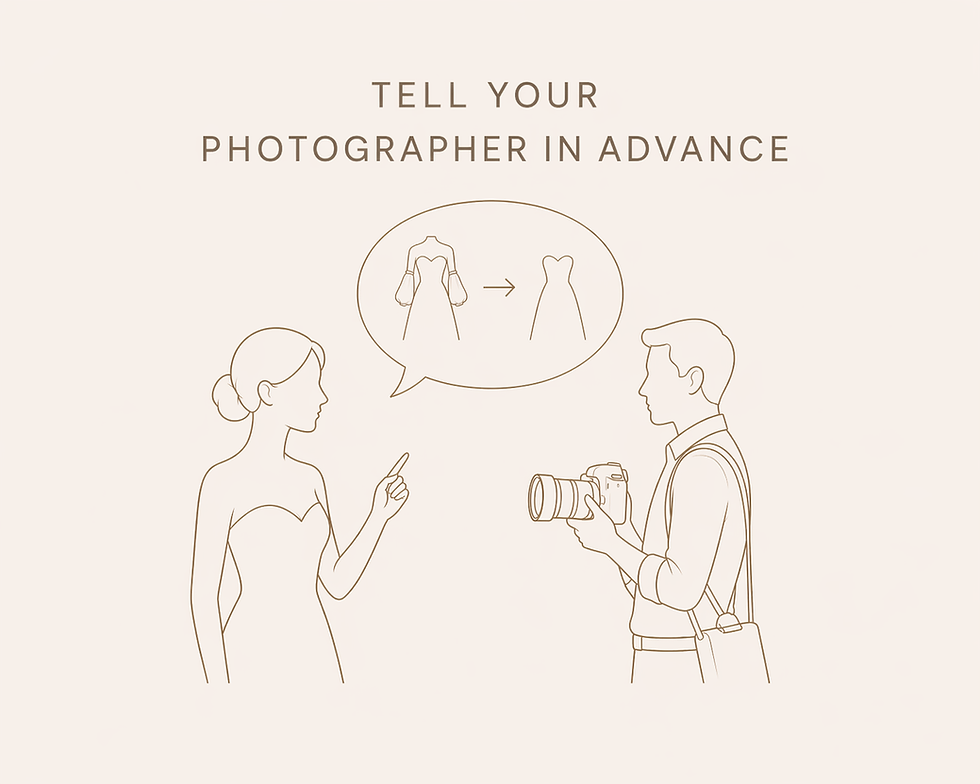
Your photographer needs to know a transformation is happening, and approximately when- so they position themselves to capture it.

04
Swapping even small accessories — moving from a cathedral veil to loose hair, or changing earrings - amplifies the impact of the transformation significantly.
A Closer Look: Detachable Sleeves on a Wedding Dress
Of all the convertible bridal options available, detachable sleeves on a wedding dress are among the most underrated, and among the most transformative. A bride who walks down the aisle in long, intricate lace sleeves and then appears at the reception in the same gown, now strapless and open, has created what feels like two completely separate looks with a single clever design decision.
There are several ways detachable sleeves are constructed and attached. The most secure versions use a combination of hidden hooks, press-studs, and ties at the shoulder and upper arm, creating a seamless look when worn and a clean separation when removed. More delicate approaches- such as flowing organza or silk sleeves that attach at a single point- are simpler to manage but require a little more care.
Designers are embracing this detail across every aesthetic in 2025: from intricately beaded lace sleeves that feel cathedral-worthy to simple sheer chiffon panels that add softness to a strapless silhouette. The option also works in reverse- some brides choose a ceremony gown they love in its sleeveless form and commission custom detachable sleeves to be made separately, adding formality and coverage for the ceremony before removing them at the reception.
At Studio Ren, we create bespoke detachable sleeves designed specifically to work with your existing gown- matching or complementing the original fabric, lace, or embellishment. If you love your dress but want a second look without the cost of a second gown, this may be the most elegant solution available to you.

What to Consider When Choosing Your Reception Dress Style
Whether you're selecting a full separate wedding reception dress or planning a convertible transformation, the same principles apply. Your second look should feel like a natural extension of your bridal identity- different in mood and energy, but clearly still yours.
Here are the most important factors to consider:
Your venue and formality level- A rooftop cocktail reception calls for something very different to a black-tie ballroom dinner. Your second look should feel right for the room and the hour.
Comfort and movement- If dancing is your priority, anything with significant restriction- a tight mermaid, heavy structured boning, or a long train- will limit you. A second look should free you, not constrain you.
Photography coherence- Your wedding album tells a story. Discuss with your photographer how both looks will be captured, and whether you want styled images in your second look or simply candid reception photographs.
Colour choice- White, ivory, and champagne all read as bridal. Soft blush, icy silver, or even a deeper rose can work beautifully as a reception look and photograph brilliantly under evening lighting.
Accessories transition- Decide in advance whether your jewellery, shoes, and hair are changing with the dress or staying the same. Changing even one element alongside the dress significantly heightens the impact of the transformation.
Ease of the change itself- If you're going for a full second dress, who is helping you change? Where will the original gown be kept safely? How long will the change realistically take? These logistics matter enormously on a day when every minute is precious.
Frequently Asked Questions
What is a second look wedding dress?
A second look wedding dress refers to any outfit a bride wears after- or instead of- her main ceremony gown, typically for the reception or after-party. It can be a completely separate dress, a mini, a jumpsuit, or simply a transformed version of the ceremony gown achieved through removing detachable elements like a skirt, sleeves, or cape.
What is a convertible wedding dress?
A convertible wedding dress is a single gown designed with removable or transformative elements built in. The same dress can look dramatically different once a detachable overskirt, train, sleeves, topper, or bow is removed- giving the bride two distinct looks from one carefully designed piece.
How much does a wedding reception dress typically cost?
A separate wedding reception dress can range from a few hundred pounds for an off-the-rack mini to several thousand for a designer gown- plus alterations. A convertible element (such as a custom overskirt or detachable sleeves made to match your existing gown) is often significantly more cost-effective, typically representing a single tailoring investment rather than a second full-gown purchase.
Can I add detachable sleeves to a dress I already own?
In most cases, yes. A specialist bridal seamstress or atelier can create bespoke detachable sleeves designed to work with your existing gown- matching the fabric, lace, or embellishment as closely as possible. The attachment method will depend on the construction of your gown. At Studio Ren, this is one of our most requested bespoke services.
How quickly can a detachable overskirt be removed during the reception?
Most well-constructed detachable overskirts can be removed in under a minute- often in as little as 30 seconds. The key is practising the removal before the day and ensuring your maid of honour knows exactly how the attachment works. The transformation can happen in a quiet corner of the room, or even staged as a moment in the middle of the dancefloor.
Do I need to tell my photographer about my second look?
Absolutely- and as early as possible. Your photographer needs to know a transformation is planned, roughly when it will happen, and whether you want styled portrait shots in your second look or simply candid coverage of the moment. A well-captured second-look reveal can be among the most joyful and memorable photographs of the entire wedding day.
Is a second wedding look only for the reception?
Not at all. Some brides use a second look for a garden party ceremony followed by a formal dinner, or change into something more relaxed for an intimate after-party once the main reception ends. The second look is simply any additional bridal outfit worn at a different point of the wedding day- and there are no rules about when that moment has to be.
Ready for Your Second Moment?
At Studio Ren, we create bespoke convertible elements- detachable sleeves, custom overskirts, bridal capes, and more designed to transform your existing gown into multiple bridal looks. One dress, entirely made yours.
Start with a Custom Wedding Dress Preview or contact us for more details.


Comments